第8章位置エネルギーとエネルギー保存
8.5 Sources of Energy8.5 エネルギー源
Learning Objectives学習目標
Learning Objectives学習目標
By the end of this section, you will be able to:
英語のヒント
この節を終えると、次のことができるようになる。
- Describe energy transformations and conversions in general terms
英語のヒント
エネルギーの変化と変換を一般的な言葉で説明する。 - Explain what it means for an energy source to be renewable or nonrenewable
英語のヒント
エネルギー源が再生可能、または非再生可能であるとはどういう意味かを説明する。
In this chapter, we have studied energy. We learned that energy can take different forms and can be transferred from one form to another. You will find that energy is discussed in many everyday, as well as scientific, contexts, because it is involved in all physical processes. It will also become apparent that many situations are best understood, or most easily conceptualized, by considering energy. So far, no experimental results have contradicted the conservation of energy. In fact, whenever measurements have appeared to conflict with energy conservation, new forms of energy have been discovered or recognized in accordance with this principle.
英語のヒント
この章ではエネルギーを学んだ。エネルギーにはさまざまな形があり、一つの形から別の形へ移せる。エネルギーはすべての物理過程に関わるため、科学だけでなく日常の多くの場面でも話題になる。多くの状況は、エネルギーを考えると最もよく理解でき、あるいは最も考えやすくなる。これまで、エネルギー保存に反する実験結果はない。実際、測定がエネルギー保存と矛盾するように見えるたびに、この原理に合う新しい形のエネルギーが発見されたり、認識されたりしてきた。
What are some other forms of energy? Many of these are covered in later chapters (also see Figure 8.13), but let’s detail a few here:
英語のヒント
ほかにどのような形のエネルギーがあるだろうか。多くは後の章で扱うが(図8.13も参照)、ここでいくつか詳しく挙げよう。
- Atoms and molecules inside all objects are in random motion. The internal kinetic energy from these random motions is called thermal energy, because it is related to the temperature of the object. In this case, the energy is known as heat energy.
英語のヒント
あらゆる物体の内部で、原子や分子は不規則に動いている。この運動の内部運動エネルギーは、物体の温度に関係するため熱エネルギーと呼ばれる。この場合、エネルギーは熱のエネルギーとして知られる。 - Electrical energy is a common form that is converted to many other forms and does work in a wide range of practical situations.
英語のヒント
電気エネルギーは、ほかの多くの形へ変換され、幅広い実際の場面で仕事をする、身近なエネルギーである。 - Fuels, such as gasoline and food, have chemical energy, which is potential energy arising from their molecular structure. Chemical energy can be converted into thermal energy by reactions like oxidation. Chemical reactions can also produce electrical energy, such as in batteries. Electrical energy can, in turn, produce thermal energy and light, such as in an electric heater or a light bulb.
英語のヒント
ガソリンや食物などの燃料は、分子構造に由来する位置エネルギーである化学エネルギーをもつ。これは酸化などの反応で熱エネルギーへ変わる。電池のように、化学反応から電気エネルギーも得られる。電気エネルギーはさらに、電熱器や電球のように熱や光を生み出せる。 - Light is just one kind of electromagnetic radiation, or radiant energy, which also includes radio, infrared, ultraviolet, X-rays, and gamma rays. All bodies with thermal energy can radiate energy in electromagnetic waves.
英語のヒント
光は電磁放射、すなわち放射エネルギーの一種であり、ほかに電波、赤外線、紫外線、X線、ガンマ線が含まれる。熱エネルギーをもつ物体はすべて、電磁波でエネルギーを放射できる。 - Nuclear energy comes from reactions and processes that convert measurable amounts of mass into energy. Nuclear energy is transformed into radiant energy in the Sun, into thermal energy in the boilers of nuclear power plants, and then into electrical energy in the generators of power plants. These and all other forms of energy can be transformed into one another and, to a certain degree, can be converted into mechanical work.
英語のヒント
核エネルギーは、測定できる量の質量をエネルギーへ変える反応や過程から生じる。太陽では放射エネルギーへ、原子力発電所のボイラーでは熱エネルギーへ、さらに発電機では電気エネルギーへ変換される。これらを含むあらゆる形のエネルギーは、互いに変換でき、ある程度は力学的な仕事へ変えられる。
Image omitted because its reuse rights could not be verified.権利の確認ができないため画像を割愛。
Figure 8.13図 8.13
Energy that we use in society takes many forms, which be converted from one into another depending on the process involved. We will study many of these forms of energy in later chapters in this text. (credit “sun”: modification of work by EIT - SOHO Consortium, ESA, NASA credit “solar panels”: “modification of work by “kjkolb”/Wikimedia Commons; credit “gas burner”: modification of work by Steven Depolo)
英語のヒント
社会で使うエネルギーには多くの形があり、関わる過程に応じて互いに変換される。本書の後の章で、その多くを学ぶ。(クレジット:太陽はEIT–SOHO Consortium、ESA、NASAの作品を改変。太陽電池パネルは“kjkolb”/Wikimedia Commonsの作品を改変。ガスバーナーはSteven Depoloの作品を改変。)
The transformation of energy from one form into another happens all the time. The chemical energy in food is converted into thermal energy through metabolism; light energy is converted into chemical energy through photosynthesis. Another example of energy conversion occurs in a solar cell. Sunlight impinging on a solar cell produces electricity, which can be used to run electric motors or heat water. In an example encompassing many steps, the chemical energy contained in coal is converted into thermal energy as it burns in a furnace, to transform water into steam, in a boiler. Some of the thermal energy in the steam is then converted into mechanical energy as it expands and spins a turbine, which is connected to a generator to produce electrical energy. In these examples, not all of the initial energy is converted into the forms mentioned, because some energy is always transferred to the environment.
英語のヒント
エネルギーは常に形を変えている。食物の化学エネルギーは代謝によって熱へ、光エネルギーは光合成によって化学エネルギーへ変わる。太陽電池でも変換が起こる。入射した太陽光が電気を生み、その電気でモーターを回したり水を温めたりできる。多段階の例では、炉で石炭を燃やし、その化学エネルギーを熱に変えて、ボイラーで水を蒸気にする。蒸気は膨張してタービンを回し、熱エネルギーの一部が力学的エネルギーへ変わる。タービンにつながる発電機が電気エネルギーを生む。いずれの例でも、初めのエネルギーがすべて述べた形へ変わるわけではない。一部は必ず周囲へ移るからである。
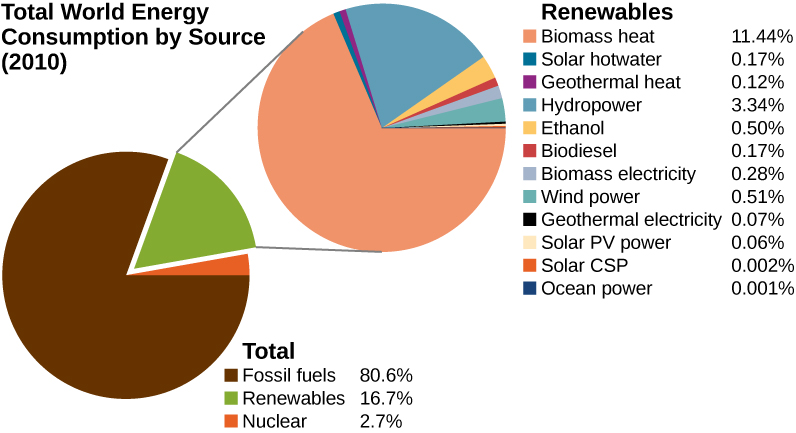
Energy is an important element at all levels of society. We live in a very interdependent world, and access to adequate and reliable energy resources is crucial for economic growth and for maintaining the quality of our lives. The principal energy resources used in the world are shown in Figure 8.14. The figure distinguishes between two major types of energy sources: renewable and non-renewable, and further divides each type into a few more specific kinds. Renewable sources are energy sources that are replenished through naturally occurring, ongoing processes, on a time scale that is much shorter than the anticipated lifetime of the civilization using the source. Non-renewable sources are depleted once some of the energy they contain is extracted and converted into other kinds of energy. The natural processes by which non-renewable sources are formed typically take place over geological time scales.
英語のヒント
エネルギーは社会のあらゆる層で重要である。私たちは互いに強く依存する世界に暮らしており、十分で信頼できるエネルギー資源を利用できることは、経済成長と生活の質を保つために欠かせない。世界で使う主な資源を図8.14に示す。大きく再生可能と非再生可能の二種類に分け、さらに具体的な種類に分類している。再生可能なエネルギー源は、継続する自然過程によって補充される。その時間尺度は、それを使う文明の予想される存続期間よりはるかに短い。非再生可能な源は、中のエネルギーを取り出して別の形に変えると減っていく。それを形成する自然過程には、通常、地質学的な時間がかかる。
OpenStax / Rice University, University Physics Volume 1, CC BY 4.0. Source-book artwork retained. · CC BY 4.0 · Source出典

Figure 8.14図 8.14
World energy consumption by source; the percentage of renewables is increasing, accounting for 19% in 2012.
英語のヒント
源別の世界のエネルギー消費。再生可能の割合は増え、2012年には19%を占めた。
Our most important non-renewable energy sources are fossil fuels, such as coal, petroleum, and natural gas. These account for about 81% of the world’s energy consumption, as shown in the figure. Burning fossil fuels creates chemical reactions that transform potential energy, in the molecular structures of the reactants, into thermal energy and products. This thermal energy can be used to heat buildings or to operate steam-driven machinery. Internal combustion and jet engines convert some of the energy of rapidly expanding gases, released from burning gasoline, into mechanical work. Electrical power generation is mostly derived from transferring energy in expanding steam, via turbines, into mechanical work, which rotates coils of wire in magnetic fields to generate electricity. Nuclear energy is the other non-renewable source shown in Figure 8.14 and supplies about 3% of the world’s consumption. Nuclear reactions release energy by transforming potential energy, in the structure of nuclei, into thermal energy, analogous to energy release in chemical reactions. The thermal energy obtained from nuclear reactions can be transferred and converted into other forms in the same ways that energy from fossil fuels are used.
英語のヒント
最も重要な非再生可能資源は、石炭、石油、天然ガスなどの化石燃料で、図のように世界の消費の約81%を占める。燃焼の化学反応は、反応物の分子構造にある位置エネルギーを、熱エネルギーと生成物へ変える。熱は建物の暖房や蒸気機械に使える。内燃機関やジェットエンジンは、ガソリンの燃焼で生じて急激に膨張する気体のエネルギーの一部を、力学的な仕事へ変える。発電の多くは、膨張する蒸気のエネルギーをタービンで仕事へ変え、磁場中のコイルを回して電気を生む。図8.14のもう一つの非再生可能源は核エネルギーで、世界の消費の約3%をまかなう。核反応は、原子核の構造中の位置エネルギーを熱へ変えて放出する。これは化学反応のエネルギー放出に似ている。核反応で得た熱も、化石燃料のエネルギーと同じ方法で移したり変換したりできる。
An unfortunate byproduct of relying on energy produced from the combustion of fossil fuels is the release of carbon dioxide into the atmosphere and its contribution to global warming. Nuclear energy poses environmental problems as well, including the safety and disposal of nuclear waste. Besides these important consequences, reserves of non-renewable sources of energy are limited and, given the rapidly growing rate of world energy consumption, may not last for more than a few hundred years. Considerable effort is going on to develop and expand the use of renewable sources of energy, involving a significant percentage of the world’s physicists and engineers.
英語のヒント
化石燃料の燃焼に頼る不都合な副産物が、大気への二酸化炭素の放出と地球温暖化への寄与である。核エネルギーにも、核廃棄物の安全性と処分を含む環境問題がある。こうした影響に加え、非再生可能資源の埋蔵量は有限であり、世界のエネルギー消費が急増していることを考えると、数百年より長くはもたないかもしれない。再生可能エネルギーの開発と利用拡大には多大な努力が注がれ、世界の物理学者や技術者のかなりの割合が関わっている。
Four of the renewable energy sources listed in Figure 8.14—those using material from plants as fuel (biomass heat, ethanol, biodiesel, and biomass electricity)—involve the same types of energy transformations and conversions as just discussed for fossil and nuclear fuels. The other major types of renewable energy sources are hydropower, wind power, geothermal power, and solar power.
英語のヒント
図8.14の再生可能源のうち、植物由来の物質を燃料とする四つ、バイオマス熱、エタノール、バイオディーゼル、バイオマス発電は、化石燃料や核燃料と同種のエネルギー変換を使う。ほかの主要な再生可能源は、水力、風力、地熱、太陽エネルギーである。
Hydropower is produced by converting the gravitational potential energy of falling or flowing water into kinetic energy and then into work to run electric generators or machinery. Converting the mechanical energy in ocean surface waves and tides is in development. Wind power also converts kinetic energy into work, which can be used directly to generate electricity, operate mills, and propel sailboats.
英語のヒント
水力は、落下または流動する水の重力による位置エネルギーを運動エネルギーへ、さらに発電機や機械を動かす仕事へ変える。海面の波や潮汐の力学的エネルギーを使う技術も開発中である。風力も運動エネルギーを仕事へ変え、その仕事を直接、発電、粉ひき機の運転、帆船の推進に使える。
The interior of Earth has a great deal of thermal energy, part of which is left over from its original formation (gravitational potential energy converted into thermal energy) and part of which is released from radioactive minerals (a form of natural nuclear energy). It will take a very long time for this geothermal energy to escape into space, so people generally regard it as a renewable source, when actually, it’s just inexhaustible on human time scales.
英語のヒント
地球内部には大量の熱エネルギーがある。一部は地球形成時の残りで、重力による位置エネルギーが熱へ変わったものである。別の一部は放射性鉱物から放出される、自然の核エネルギーである。この地熱が宇宙へ逃げるには非常に長い時間がかかる。そのため一般には再生可能源とみなすが、実際には人間の時間尺度で尽きないということである。
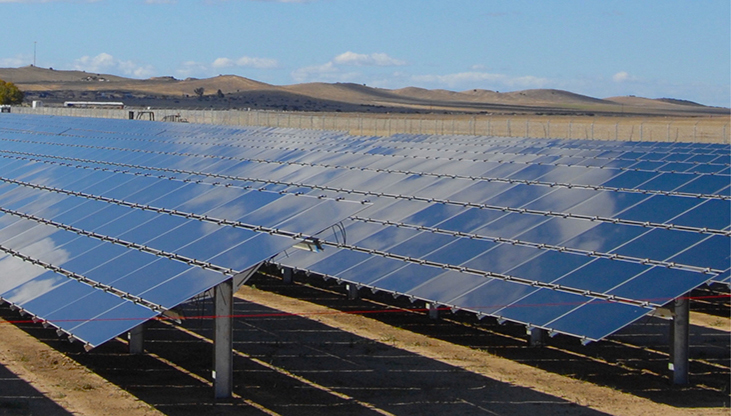
The source of solar power is energy carried by the electromagnetic waves radiated by the Sun. Most of this energy is carried by visible light and infrared (heat) radiation. When suitable materials absorb electromagnetic waves, radiant energy is converted into thermal energy, which can be used to heat water, or when concentrated, to make steam and generate electricity (Figure 8.15). However, in another important physical process, known as the photoelectric effect, energetic radiation impinging on certain materials is directly converted into electricity. Materials that do this are called photovoltaics (PV in Figure 8.14). Some solar power systems use lenses or mirrors to concentrate the Sun’s rays, before converting their energy through photovoltaics, and these are qualified as CSP in Figure 8.14.
英語のヒント
Sarah Swenty / U.S. Fish and Wildlife Service. Modified in OpenStax University Physics Volume 1. · US government public domain; OpenStax additions CC BY 4.0 · Source出典

Figure 8.15図 8.15
Solar cell arrays found in a sunny area converting the solar energy into stored electrical energy. (credit: modification of work by Sarah Swenty, U.S. Fish and Wildlife Service)
英語のヒント
日当たりのよい場所で、太陽エネルギーを電気へ変えて蓄える太陽電池アレイ。(クレジット:米国魚類野生生物局Sarah Swentyの作品を改変)
As we finish this chapter on energy and work, it is relevant to draw some distinctions between two sometimes misunderstood terms in the area of energy use. As we mentioned earlier, the “law of conservation of energy” is a very useful principle in analyzing physical processes. It cannot be proven from basic principles but is a very good bookkeeping device, and no exceptions have ever been found. It states that the total amount of energy in an isolated system always remains constant. Related to this principle, but remarkably different from it, is the important philosophy of energy conservation. This concept has to do with seeking to decrease the amount of energy used by an individual or group through reducing activities (e.g., turning down thermostats, driving fewer kilometers) and/or increasing conversion efficiencies in the performance of a particular task, such as developing and using more efficient room heaters, cars that have greater miles-per-gallon ratings, energy-efficient compact fluorescent lights, etc.
英語のヒント
エネルギーと仕事の章を終えるにあたり、エネルギー利用の分野で誤解されることのある二つの意味を区別しておこう。すでに述べた「エネルギー保存則」は、物理過程を解析するのに非常に有用な原理である。基本原理から証明はできないが、エネルギーの収支を管理する優れた道具であり、例外は見つかっていない。孤立系のエネルギーの総量は常に一定である、という法則である。これに関係はあるが大きく異なるのが、energy conservationのもう一つの意味、省エネルギーという考え方である。これは、活動量を減らしたり、作業時の変換効率を高めたりして、個人や集団の使うエネルギーを減らすことを目指す。前者の例は暖房の設定温度を下げる、運転する距離を減らすこと。後者の例は、効率のよい暖房器、燃費のよい車、省エネルギーの小型蛍光灯などを開発して使うことである。
Since energy in an isolated system is not destroyed, created, or generated, you might wonder why we need to be concerned about our energy resources, since energy is a conserved quantity. The problem is that the final result of most energy transformations is waste heat, that is, work that has been “degraded” in the energy transformation. We will discuss this idea in more detail in the chapters on thermodynamics.
英語のヒント
孤立系ではエネルギーは消えず、作られず、生み出されず、保存量である。それなら、なぜエネルギー資源を気にする必要があるのだろうか。問題は、多くのエネルギー変換の最終結果が廃熱、つまり変換の中で「質が低下した」仕事になることである。この考えは熱力学の章でさらに詳しく扱う。