第4章二次元・三次元の運動
Summaryまとめ
- In two and three dimensions, the acceleration vector can have an arbitrary direction and does not necessarily point along a given component of the velocity.
英語のヒント
2次元や3次元の加速度ベクトルは任意の向きを取り、必ずしも速度の特定の成分の向きを指すとは限らない。 - The instantaneous acceleration is produced by a change in velocity taken over a very short (infinitesimal) time period. Instantaneous acceleration is a vector in two or three dimensions. It is found by taking the derivative of the velocity function with respect to time.
英語のヒント
瞬間加速度は、非常に短い(無限小の)時間間隔における速度の変化から得られる。2次元や3次元のベクトルであり、速度関数を時間で微分して求める。 - In three dimensions, acceleration can be written as a vector sum of the one-dimensional accelerations along the x-, y-, and z-axes.
英語のヒント
3次元では、加速度を、x軸、y軸、z軸に沿う1次元の加速度のベクトル和として書ける。 - The kinematic equations for constant acceleration can be written as the vector sum of the constant acceleration equations in the x, y, and z directions.
英語のヒント
等加速度運動の式は、x、y、z各方向の等加速度運動の式のベクトル和として書ける。
Conceptual Questions概念を確かめる問題
Exercises 13–15練習問題 13–15
Exercise 13問題 13
If the position function of a particle is a linear function of time, what can be said about its acceleration?
英語のヒント
粒子の位置関数が時間の1次関数である場合、加速度について何がいえるか。
Exercise 14問題 14
If an object has a constant x-component of the velocity and suddenly experiences an acceleration in the y direction, does the x-component of its velocity change?
英語のヒント
速度のx成分が一定の物体が、突然y方向の加速度を受けたとき、速度のx成分は変わるか。
Solution解き方
No, motions in perpendicular directions are independent.
英語のヒント
変わらない。垂直な方向の運動は独立している。
Exercise 15問題 15
If an object has a constant x-component of velocity and suddenly experiences an acceleration at an angle of in the x direction, does the x-component of velocity change?
英語のヒント
速度のx成分が一定の物体が、突然x方向に対して角度の加速度を受けたとき、速度のx成分は変わるか。
Problems問題
Exercises 16–22練習問題 16–22
Exercise 16問題 16
The position of a particle is (a) Determine its velocity and acceleration as functions of time. (b) What are its velocity and acceleration at time t = 0?
英語のヒント
粒子の位置はである。(a)速度と加速度を時間の関数として求めよ。(b)t = 0での速度と加速度は何か。
Exercise 17問題 17
A particle’s acceleration is At t = 0, its position and velocity are zero. (a) What are the particle’s position and velocity as functions of time? (b) Find the equation of the path of the particle. Draw the x- and y-axes and sketch the trajectory of the particle.
英語のヒント
粒子の加速度はである。t = 0で、位置と速度は0である。(a)位置と速度を時間の関数として求めよ。(b)粒子の経路の方程式を求めよ。x軸とy軸を描き、軌道の概形を示せ。
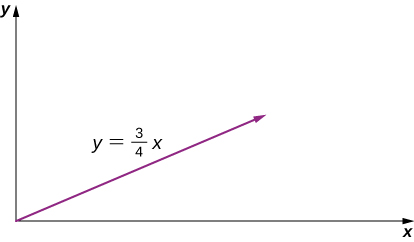

Exercise 18問題 18
A boat leaves the dock at t = 0 and heads out into a lake with an acceleration of A strong wind is pushing the boat, giving it an additional velocity of (a) What is the velocity of the boat at t = 10 s? (b) What is the position of the boat at t = 10s? Draw a sketch of the boat’s trajectory and position at t = 10 s, showing the x- and y-axes.
英語のヒント
ボートがt = 0に桟橋を離れ、加速度で湖へ進み出る。強い風がボートを押し、速度を加える。(a)t = 10 sでの速度は何か。(b)t = 10 sでの位置は何か。x軸とy軸を示し、ボートの軌道とt = 10 sでの位置の略図を描け。
Exercise 19問題 19
The position of a particle for t > 0 is given by (a) What is the velocity as a function of time? (b) What is the acceleration as a function of time? (c) What is the particle’s velocity at t = 2.0 s? (d) What is its speed at t = 1.0 s and t = 3.0 s? (e) What is the average velocity between t = 1.0 s and t = 2.0 s?
英語のヒント
t > 0での粒子の位置がで与えられる。(a)速度を時間の関数として求めよ。(b)加速度を時間の関数として求めよ。(c)t = 2.0 sでの速度は何か。(d)t = 1.0 sとt = 3.0 sでの速さはいくらか。(e)t = 1.0 sからt = 2.0 sの間の平均速度は何か。
Solution解き方
a.
b.
c.
d.
,
e. ,
b.
c.
d.
,
e. ,
(a)。(b)。(c)。(d)、。(e)、。
Exercise 20問題 20
The acceleration of a particle is a constant. At t = 0 the velocity of the particle is At t = 4 s the velocity is (a) What is the particle’s acceleration? (b) How do the position and velocity vary with time? Assume the particle is initially at the origin.
英語のヒント
粒子の加速度は一定である。t = 0での速度は、t = 4 sでの速度はである。(a)粒子の加速度は何か。(b)位置と速度は時間とともにどう変わるか。粒子は初めに原点にあるとする。
Exercise 21問題 21
A particle has a position function where the arguments of the cosine and sine functions are in radians. (a) What is the velocity vector? (b) What is the acceleration vector?
英語のヒント
粒子の位置関数はであり、余弦と正弦の関数の引数はラジアンで表す。(a)速度ベクトルは何か。(b)加速度ベクトルは何か。
Solution解き方
a. , b.
(a)。(b)。
Exercise 22問題 22
A Lockheed Martin F-35 II Lighting jet takes off from an aircraft carrier with a runway length of 90 m and a takeoff speed 70 m/s at the end of the runway. Jets are catapulted into airspace from the deck of an aircraft carrier with two sources of propulsion: the jet propulsion and the catapult. At the point of leaving the deck of the aircraft carrier, the F-35’s acceleration decreases to a constant acceleration of at with respect to the horizontal. (a) What is the initial acceleration of the F-35 on the deck of the aircraft carrier to make it airborne? (b) Write the position and velocity of the F-35 in unit vector notation from the point it leaves the deck of the aircraft carrier. (c) At what altitude is the fighter 5.0 s after it leaves the deck of the aircraft carrier? (d) What is its velocity and speed at this time? (e) How far has it traveled horizontally?
英語のヒント
ロッキード・マーティンのF-35 IIライトニングが、長さ90 mの滑走路を持つ空母から、滑走路の端で速さ70 m/sとなって離陸する。ジェット機は、ジェット推進とカタパルトの二つの推進源によって、空母の甲板から空中へ射出される。甲板を離れた地点で、F-35の加速度は、水平方向に対しての向きを持つ一定の加速度へ減少する。(a)空中へ浮かぶために必要な、甲板上での初めの加速度はいくらか。(b)甲板を離れる地点からの位置と速度を、単位ベクトルで表せ。(c)甲板を離れて5.0 s後の高度はいくらか。(d)その時刻の速度と速さは何か。(e)水平方向へどれだけ進んだか。
acceleration vector
加速度ベクトル
instantaneous acceleration found by taking the derivative of the velocity function with respect to time in unit vector notation
英語のヒント
単位ベクトルで表した速度関数を時間で微分して得る瞬間加速度。