第1章基礎
Simplify: Expressions with Absolute Value絶対値を含む式を簡単にする
We saw that numbers such as are opposites because they are the same distance from 0 on the number line. They are both two units from 0. The distance between 0 and any number on the number line is called the absolute value of that number.
英語のヒント
のような数は、数直線上で0からの距離が同じなので、互いに符号を逆にした数であると学んだ。どちらも0から2単位離れている。数直線上で、ある数と0の間の距離を、その数の絶対値という。
For example,
英語のヒント
例えば、
- units away from so
英語のヒント
単位だけから離れているので、である。 - units away from so
英語のヒント
単位だけから離れているので、である。
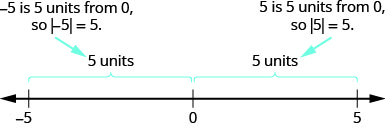
Figure 1.10図 1.10
The integers units away from
英語のヒント
整数単位だけから離れている。
The absolute value of a number is never negative (because distance cannot be negative). The only number with absolute value equal to zero is the number zero itself, because the distance from on the number line is zero units.
英語のヒント
距離は負にならないので、数の絶対値が負になることはない。絶対値がゼロになる数はゼロだけである。数直線上での距離は0単位だからである。
Mathematicians say it more precisely, “absolute values are always non-negative.” Non-negative means greater than or equal to zero.
英語のヒント
数学では、より正確に「絶対値は常に非負である」という。非負とは、ゼロ以上という意味である。
Example 1.33例題 1.33
Simplify: ⓐ ⓑ ⓒ .
英語のヒント
簡単にせよ。ⓐ ⓑ ⓒ
Solution解答
The absolute value of a number is the distance between the number and zero. Distance is never negative, so the absolute value is never negative.
英語のヒント
ある数の絶対値は、その数とゼロの間の距離である。距離は負にならないので、絶対値も負にならない。
ⓐ
ⓑ
ⓒ
ⓑ
ⓒ
Try It (2)確認問題(2題)
In the next example, we’ll order expressions with absolute values. Remember, positive numbers are always greater than negative numbers!
英語のヒント
次の例では、絶対値を含む式の大小を比べる。正の数は必ず負の数より大きいことを思い出そう。
Example 1.34例題 1.34
Fill in for each of the following pairs of numbers:
英語のヒント
各組の数の間に、を入れよ。
ⓐ ⓑ ⓒ ⓓ
Solution解答
ⓐ Simplify. Order. ⓐ 簡単にして、大小を比べる。 |
|
ⓑ Simplify. Order. ⓑ 簡単にして、大小を比べる。 |
|
ⓒ Simplify. Order. ⓒ 簡単にして、大小を比べる。 |
|
ⓓ Simplify. Order. ⓓ 簡単にして、大小を比べる。 |
Try It (2)確認問題(2題)
We now add absolute value bars to our list of grouping symbols. When we use the order of operations, first we simplify inside the absolute value bars as much as possible, then we take the absolute value of the resulting number.
英語のヒント
まとまりを示す記号に、絶対値の縦線を加えよう。演算の順序に従い、まず絶対値の縦線の内側をできる限り簡単にし、次に得られた数の絶対値を求める。
In the next example, we simplify the expressions inside absolute value bars first, just as we do with parentheses.
英語のヒント
次の例では、括弧のときと同様、絶対値の縦線の内側の式を先に簡単にする。
Example 1.35例題 1.35
Simplify:
英語のヒント
次の式を簡単にする:
Solution解答
Work inside parentheses first: subtract 2 from 6. まず括弧の中を計算する。6から2を引く。 |
|
Multiply 3(4). 3(4)を掛ける。 |
|
Subtract inside the absolute value bars. 絶対値の縦線の内側で引き算をする。 |
|
Take the absolute value. 絶対値を取る。 |
|
Subtract. 引く。 |
Try It (2)確認問題(2題)
Example 1.36例題 1.36
Evaluate: ⓐ ⓑ ⓒ ⓓ
英語のヒント
値を求めよ。ⓐ ⓑ ⓒ ⓓ
Solution解答
ⓐ
ⓐ
 |
 |
Take the absolute value. 絶対値を取る。 |
35 |
ⓑ
ⓑ
 |
 |
Simplify. 簡単にする。 |
|
Take the absolute value. 絶対値を取る。 |
20 |
ⓒ
ⓒ
 |
 |
Take the absolute value. 絶対値を取る。 |
ⓓ
ⓓ
 |
 |
Take the absolute value. 絶対値を取る。 |
Try It (2)確認問題(2題)
Add Integers整数を足す
Most students are comfortable with the addition and subtraction facts for positive numbers. But doing addition or subtraction with both positive and negative numbers may be more challenging.
英語のヒント
正の数の足し算や引き算には慣れている学生が多い。しかし、正負の数が両方出てくると、難しく感じるかもしれない。
Additional Resources追加教材
We will use two color counters to model addition and subtraction of negatives so that you can visualize the procedures instead of memorizing the rules.
英語のヒント
二色のコマを使って、負の数の加法や減法を表す。規則を丸暗記するのではなく、手順を目で捉えられるようにするためである。
We let one color (blue) represent positive. The other color (red) will represent the negatives. If we have one positive counter and one negative counter, the value of the pair is zero. They form a neutral pair. The value of this neutral pair is zero.
英語のヒント
一方の色、青で正を、もう一方の赤で負を表す。正のコマ1個と負のコマ1個を組にすると、その値はゼロになる。これを打ち消し合う組という。この組の値はゼロである。
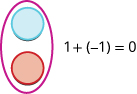
We will use the counters to show how to add the four addition facts using the numbers and
英語のヒント
コマを使い、とによる四通りの足し算を示す。
To add we realize that means the sum of 5 and 3.
英語のヒント
を計算するために、が5と3の和を意味することを確認する。
We start with 5 positives. 正のコマ5個から始める。 |
 |
And then we add 3 positives. 次に正のコマ3個を加える。 |
 |
We now have 8 positives. The sum of 5 and 3 is 8. 正のコマが8個になる。5と3の和は8である。 |
 |
Now we will add Watch for similarities to the last example
英語のヒント
今度はを計算する。先ほどの例と似ている点に注目しよう。
To add we realize this means the sum of
英語のヒント
を計算するために、これがの和を意味することを確認する。
We start with 5 negatives. 負のコマ5個から始める。 |
 |
And then we add 3 negatives. 次に負のコマ3個を加える。 |
 |
We now have 8 negatives. The sum of −5 and −3 is −8. 負のコマが8個になる。−5と−3の和は−8である。 |
 |
In what ways were these first two examples similar?
英語のヒント
最初の二つの例は、どこが似ていただろうか。
- The first example adds 5 positives and 3 positives—both positives.
英語のヒント
最初の例では、正5個と正3個という、正同士を足している。 - The second example adds 5 negatives and 3 negatives—both negatives.
英語のヒント
二つ目の例では、負5個と負3個という、負同士を足している。
In each case we got 8—either 8 positives or 8 negatives.
英語のヒント
どちらも、正8個または負8個というように、8個が得られた。
When the signs were the same, the counters were all the same color, and so we added them.
英語のヒント
符号が同じなら、コマはすべて同じ色なので、そのまま合わせた。

Example 1.37例題 1.37
Add: ⓐ ⓑ
英語のヒント
足し算せよ。ⓐ ⓑ
Solution解答
ⓐ
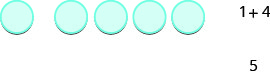 |
1 positive plus 4 positives is 5 positives. 正1個に正4個を加えると、正5個になる。 |
ⓑ
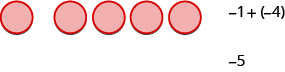 |
1 negative plus 4 negatives is 5 negatives. 負1個に負4個を加えると、負5個になる。 |
Try It (2)確認問題(2題)
So what happens when the signs are different? Let’s add We realize this means the sum of and 3. When the counters were the same color, we put them in a row. When the counters are a different color, we line them up under each other.
英語のヒント
では、符号が異なるとどうなるだろうか。を計算しよう。これはと3の和を意味する。コマが同じ色のときは一列に並べたが、色が異なるときは上下にそろえて並べる。
−5 + 3 means the sum of −5 and 3. −5+3は、−5と3の和を意味する。 |
|
We start with 5 negatives. 負のコマ5個から始める。 |
 |
And then we add 3 positives. 次に正のコマ3個を加える。 |
 |
We remove any neutral pairs. 打ち消し合う組をすべて取り除く。 |
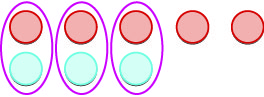 |
We have 2 negatives left. 負のコマが2個残る。 |
 |
The sum of −5 and 3 is −2. −5と3の和は−2である。 |
−5 + 3 = −2 |
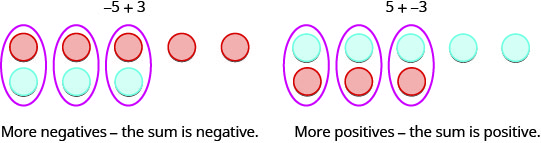
Notice that there were more negatives than positives, so the result was negative.
英語のヒント
正より負が多かったので、結果は負になったことに注目しよう。
Let’s now add the last combination,
英語のヒント
最後の組合せ、を計算しよう。
5 + (−3) means the sum of 5 and −3. 5+(−3)は、5と−3の和を意味する。 |
|
We start with 5 positives. 正のコマ5個から始める。 |
 |
And then we add 3 negatives. 次に負のコマ3個を加える。 |
 |
We remove any neutral pairs. 打ち消し合う組をすべて取り除く。 |
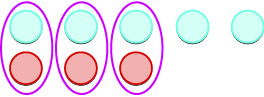 |
We have 2 positives left. 正のコマが2個残る。 |
 |
The sum of 5 and −3 is 2. 5と−3の和は2である。 |
5 + (−3) = 2 |
When we use counters to model addition of positive and negative integers, it is easy to see whether there are more positive or more negative counters. So we know whether the sum will be positive or negative.
英語のヒント
正負の整数の加法をコマで表すと、正と負のどちらのコマが多いかがよく分かる。したがって、和が正か負かも分かる。
Example 1.38例題 1.38
Add: ⓐ ⓑ
英語のヒント
足し算せよ。ⓐ ⓑ
Solution解答
ⓐ
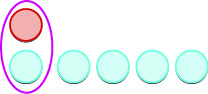
−1 + 5 |
|
 |
|
There are more positives, so the sum is positive. 正が多いので、和は正である。 |
4 |
ⓑ
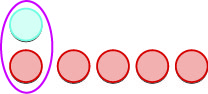
1 + (−5) |
|
 |
|
There are more negatives, so the sum is negative. 負が多いので、和は負である。 |
−4 |
Try It (2)確認問題(2題)
Now that we have added small positive and negative integers with a model, we can visualize the model in our minds to simplify problems with any numbers.
英語のヒント
小さい正負の整数をコマで足し合わせたので、今度はその様子を頭に思い浮かべ、どんな数の問題も簡単にしていこう。
When you need to add numbers such as you really don’t want to have to count out 37 blue counters and 53 red counters. With the model in your mind, can you visualize what you would do to solve the problem?
英語のヒント
のような足し算では、青いコマ37個と赤いコマ53個を実際に数えるのは避けたい。コマの配置を頭に描いて、どのように解くか考えられるだろうか。
Picture 37 blue counters with 53 red counters lined up underneath. Since there would be more red (negative) counters than blue (positive) counters, the sum would be negative. How many more red counters would there be? Because there are 16 more red counters.
英語のヒント
青いコマ37個と、その下に並ぶ赤いコマ53個を思い描こう。青い正のコマより赤い負のコマが多いので、和は負になる。赤いコマは何個多いだろうか。なので、16個多い。
Therefore, the sum of is
英語のヒント
したがって、の和はである。
Let’s try another one. We’ll add Again, imagine 74 red counters and 27 more red counters, so we’d have 101 red counters. This means the sum is
英語のヒント
もう一つ試そう。を計算する。赤いコマ74個に、さらに赤いコマ27個を加えると、赤いコマ101個になる。つまり、和はである。
Let’s look again at the results of adding the different combinations of and
英語のヒント
とのいろいろな組合せを足した結果を、もう一度見よう。
Visualize the model as you simplify the expressions in the following examples.
英語のヒント
次の例では、コマを頭に描きながら式を簡単にしよう。
Example 1.39例題 1.39
Simplify: ⓐ ⓑ
英語のヒント
簡単にせよ:ⓐ ⓑ
Solution解答
- ⓐ Since the signs are different, we subtract The answer will be negative because there are more negatives than positives.
英語のヒント
ⓐ 符号が異なるので、を引く。正より負が多いので、答えは負になる。 - ⓑ Since the signs are the same, we add. The answer will be negative because there are only negatives.
英語のヒント
ⓑ 符号が同じなので足す。負だけなので、答えは負になる。
Try It (2)確認問題(2題)
The techniques used up to now extend to more complicated problems, like the ones we’ve seen before. Remember to follow the order of operations!
英語のヒント
ここまでの方法は、以前に見たような、もっと複雑な問題にも使える。演算の順序を忘れずに守ろう。
Example 1.40例題 1.40
Simplify:
英語のヒント
次の式を簡単にする:
Solution解答
Simplify inside the parentheses. 丸括弧の内側を簡単にする。 |
|
Multiply. 掛ける。 |
|
Add left to right. 左から右へ足す。 |